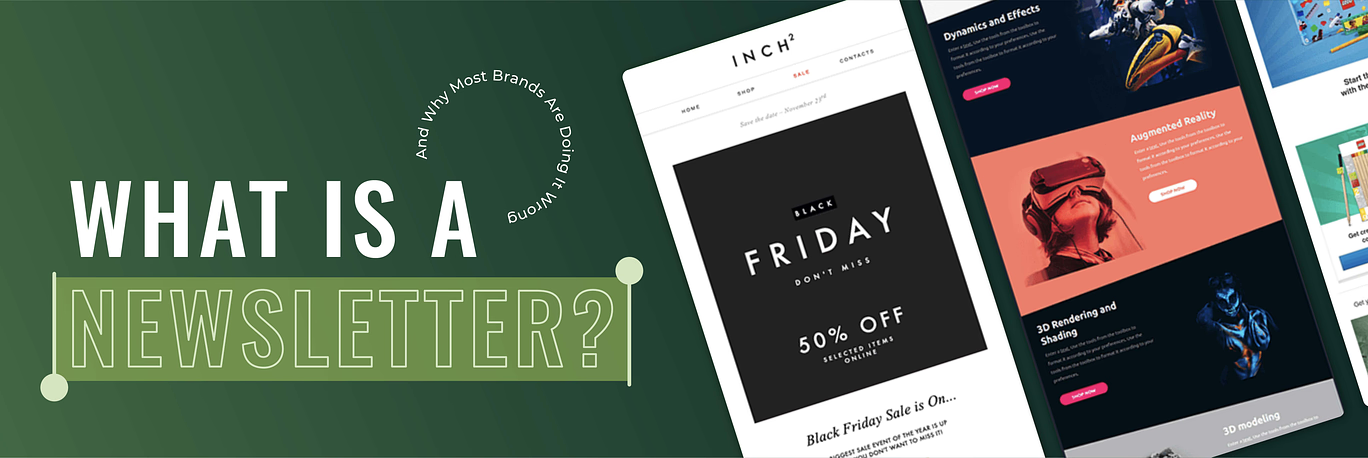
What Is a Newsletter? And Why Most Brands Are Doing It Wrong
- No Comments
- Read Time: 6 Minutes
What Is a Newsletter? And Why Most Brands Are Doing It Wrong
You’ve probably done this yourself.
You find a brand you like, maybe a design studio, a local coffee roaster or a software tool you use every day, and you spot a little box that says “Subscribe to our newsletter”. You pop your email address in, expecting tips, ideas or at least something interesting.
Then the first email arrives.
It’s a monthly roundup: the team went to a conference, there’s a new product in the range, someone had a birthday, and there’s 15% off if you order before Friday.
The second email looks much the same. By the third, you’re hovering over the unsubscribe link.
So what is a newsletter actually supposed to do for the person reading it? And why do so many brands end up sending emails that nobody asked for, even to people who technically signed up?
Let’s unpack it.
What is a newsletter?
In simple terms, a newsletter is a recurring email sent to people who have chosen to subscribe, usually built around a clear topic or purpose. It arrives on a regular rhythm (weekly, every two weeks or monthly) and subscribers should have a fairly good idea of what they’ll get each time.
That makes it different from a few other types of email that often get lumped in with it.
A once-off promotional email, such as a Black Friday sale announcement, is a campaign, not a newsletter.
An automated welcome email that lands the moment someone signs up is part of an email sequence.
Both have their place, but a newsletter is the ongoing conversation you keep having with your audience long after the sign-up form has done its job.
The key word in that definition is chosen.
Someone gave you access to their inbox, one of the most personal and cluttered spaces in their digital life. That’s a big deal, and it’s worth treating it that way. In the US, there’s a legal side too: under the CAN-SPAM Act, every marketing email has to include a clear way to unsubscribe and a valid physical mailing address, and opt-out requests have to be honored promptly. The law doesn’t require opt-in consent, but a newsletter people genuinely asked for is still good manners and good business.
Why do brands send newsletters?
There are plenty of good reasons for a business to invest in a newsletter, and they tend to overlap.
Staying in touch – Social media algorithms decide who sees your posts. An email list is one of the few channels you actually own, and a newsletter keeps you on your audience’s radar between purchases or projects.
Sharing expertise – A newsletter is a brilliant place to show what you know. A regular email with practical advice positions your business as the go-to source in your field, often more effectively than a sales pitch ever could.
Bringing people back – Whether it’s a new blog post, a service page or a product launch, a newsletter gives subscribers a reason to return to your website or offering.
Building trust over time – People rarely buy from a brand the first time they hear of it. Showing up consistently, with something useful, builds the kind of familiarity that eventually turns readers into customers.
Here’s the catch, though.
Every one of these benefits depends on the subscriber actually wanting to read your emails. Each newsletter still needs to offer something worthwhile to the person on the other end, otherwise you’re not staying in touch, you’re just adding to the noise.
Why most brands are doing it wrong
If you’re like us, you’ve subscribed to (and quietly unsubscribed from) more newsletters than you can count. When we look at the ones that didn’t make the cut, the same mistakes come up again and again.
Mistake 1 - Making it all about the business
“We moved offices!” “Meet our new intern!” “We turned five!”
Company news can be lovely, but on its own it rarely answers the question every reader is silently asking: what’s in it for me? If your newsletter reads like an internal memo, subscribers will treat it like one and skim straight past it.
Mistake 2 - Sending a sales pitch every time
Promotions aren’t the enemy.
But when every email is a discount, a launch or a “last chance”, readers learn to expect a pitch and stop opening. A clothing brand that sends “NEW IN” three times a week will quickly become background noise, while one that mixes in styling advice and the occasional offer gives people a reason to stick around.
Mistake 3 - Sending the same content to everyone
Imagine a garden center sending the same email to a first-time balcony gardener and a commercial landscaper.
One of them is going to be bored, and the other is going to be lost. When subscribers have different interests or needs, one-size-fits-all content means it fits nobody particularly well. Even basic list segmentation, like splitting your list by customer type or interest, can make a noticeable difference.
Mistake 4 - Changing topic or format constantly
One month it’s a long-form article, the next it’s a product catalog, then it’s a single image with a link. When a newsletter keeps shifting shape, readers never know what they’re getting, and uncertainty is a quick path to the unsubscribe button.
Consistency helps people recognize your email in a crowded inbox and decide, almost instantly, that it’s worth opening.
Mistake 5 - Judging success only by open rates
Open rates are tempting to obsess over, but they only tell part of the story.
Since Apple introduced Mail Privacy Protection, Apple Mail can preload tracking pixels so emails register as opened even when nobody has read them, which inflates the numbers. If your email was meant to drive people to a new blog post, the real question is how many clicked through and read it. If it was meant to fill workshop seats, count the bookings.
Measure the action the email was designed to encourage, not just whether it was opened.
What a good newsletter looks like
The good news is that great newsletters aren’t built on secret tricks. They tend to share a handful of simple qualities.
A clear subscriber promise – Readers should know exactly what they’re signing up for. “Practical branding tips for small businesses, every second Tuesday” is far more compelling than “Stay up to date with our news.”
A recognizable format – Same structure, same tone, same general look. Your subscribers should be able to spot your email at a glance and know roughly how long it will take to read.
One main idea per email – Trying to cover everything usually means nothing sticks. A single, focused idea is easier to read, easier to remember and easier to act on.
Genuinely useful content – Teach something, save your reader time, inspire them or make them laugh. Ideally, they should feel slightly better off for having opened it.
A relevant next step – Every email should point somewhere sensible, whether that’s reading a full article, booking a call or replying with a question. One clear call to action beats five competing ones.
To see the difference in practice, picture two emails from the same marketing agency.
The first is titled “Here’s what we did this month”. It lists three new clients, a team photo from a year-end function and a reminder that the agency offers web design.
The second is titled “3 lessons from redesigning 3 websites this month”. It shares one short, practical takeaway from each project, such as the navigation change that reduced drop-offs or the homepage headline that doubled inquiries, and ends with a link to a full case study.
Both emails are about the agency’s work. Only the second is written for the reader.
Write A Useful
Newsletter
How to start or improve a newsletter
Whether you’re launching your first newsletter or rescuing one that’s lost its spark, this simple process will get you on the right track.
Step 1 - Define your audience
Who are you actually writing for? Get specific. “Small business owners” is a start, but “owners of small hospitality businesses who handle their own marketing” gives you something to work with. The clearer your reader, the easier every other decision becomes.
Step 2 - Write a one-sentence promise
Summarize what subscribers will get, and how often, in a single sentence. If you can’t do it, your newsletter probably doesn’t have a clear enough purpose yet. Put this promise on your sign-up form so expectations are set from day one.
Step 3 - Choose your recurring themes
Pick three to five topics you can return to again and again. These act as content pillars and save you from staring at a blank screen every month wondering what to write about.
Step 4 - Settle on a sustainable frequency
Weekly sounds ambitious until you’re three weeks in and scrambling. Be honest about what your team can realistically produce without the quality dropping. A great monthly newsletter is far better than a rushed weekly one.
Step 5 - Create a simple template
Design a clean, on-brand template that you can reuse each time, with a consistent header, a space for your main idea and a clear spot for your call to action.
Most email platforms, such as Mailchimp or HubSpot, make this straightforward. Your subscribers will open your emails in all sorts of apps and devices, so it’s worth glancing at Litmus’s email client market share report and testing your template on the clients your audience is most likely to use, especially on mobile.
If your brand visuals need a refresh first, a bit of graphic design support goes a long way.
Step 6 - Review what subscribers respond to
Every few months, look at which emails earned the most clicks, replies and conversions, and which ones fell flat.
Pay attention to unsubscribes too.
Then do more of what works and less of what doesn’t. A newsletter is never really finished; it gets better the more you listen.
Conclusion
So, what is a newsletter at its best?
It’s a regular email that people are genuinely glad to receive. It respects the reader’s time, keeps its promise and offers something of value every single time it lands in the inbox. Get that right, and the benefits of staying top of mind, building trust and bringing people back will follow naturally.
Most brands go wrong not because they lack effort, but because they forget who the newsletter is really for. Start with your reader, and you’re already ahead of the pack.
If you’d like a hand shaping your newsletter strategy, writing content your subscribers will look forward to, or designing an email template that looks the part, give us a shout.
It’s all part of our digital marketing services, and we’d love to help you create a newsletter people actually want to open.
Related

Post a Comment cancel reply
This site uses Akismet to reduce spam. Learn how your comment data is processed.